We use cookies to make your experience better. To comply with the new e-Privacy directive, we need to ask for your consent to set the cookies. Learn more.
- Kris Coombes
- News
- 3 Nov 2015
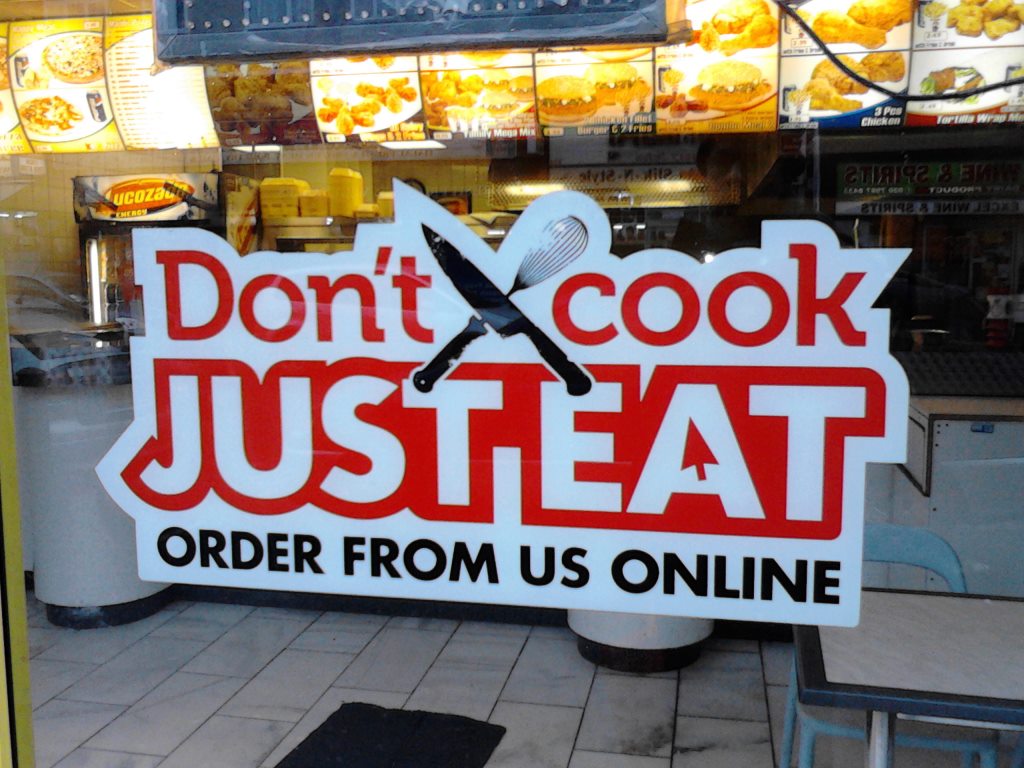
Online ordering has changed the landscape of the restaurant industry over the last decade. But how does it affect business?
To quote Tom Goodwin of Havas Media (via Tech Crunch), “Uber, the world’s largest taxi company, owns no vehicles. Facebook, the world’s most popular media owner, creates no content. Alibaba, the most valuable retailer, has no inventory. And Airbnb, the world’s largest accommodation provider, owns no real estate. Something interesting is happening.”
And now, Just Eat, the world’s largest takeout food vendor, owns no takeaways. Soon, Deliveroo will be the grandest restaurant delivery service in Europe, without owning a single eatery.
The restaurant industry is a unique case. There is no threat of an online powerhouse like Amazon or Uber laying claim to all business, because online ordering portals must coexist with the restaurant infrastructure that’s already in place.
However, the rise of Just Eat, Hungry House and, more recently and relevantly, Deliveroo means that a growing market is now being served: those with a hectic, 24/7, life-on-demand lifestyle.
Deliveroo wouldn’t be a success if people didn’t want restaurant-quality food without having to leave the comfort of their living rooms or their desk.
With this new-found attitude to convenience, where does this leave the restaurant industry?
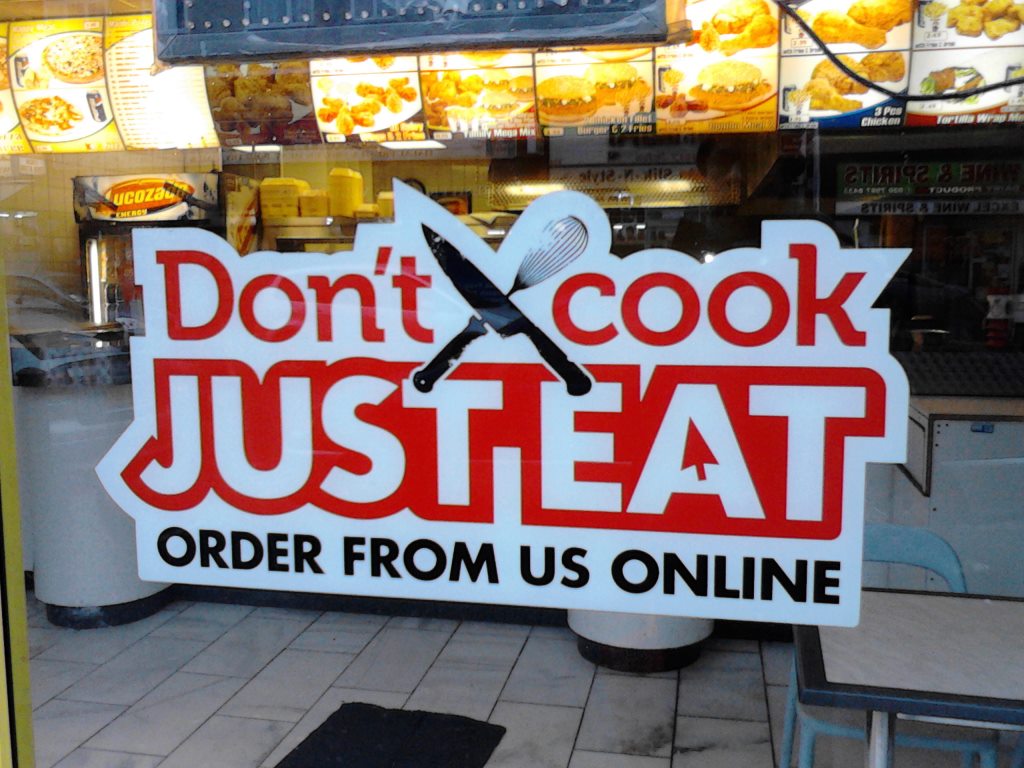
How Online Ordering Works
As mentioned before, online ordering platforms have criteria for who they do business with. It’s also important to know exactly how they make their money.
For example, Deliveroo’s income is generated from two sources. The first is a delivery charge levied on the customer, which is at no cost to the restaurant. The second is a commission from the restaurant on each order.
Once ordered, the food reaches the customer via their network of freelance delivery people.
A Fresh, But Capped Market
It’s safe to say that having an online presence opens up a market for restaurants. The issue here is that the main operative, Deliveroo, operates on a micro-local scale.
This isn’t without reason. Restaurant-quality food has diminishing quality overtime, losing both some flavour and some heat. As a result, if it takes over 10 minutes to deliver food, or if the restaurant is over 2.5km away from your location, Deliveroo won’t do it, and that’s only to the benefit of the restaurant and the customer.
This seems limiting, particularly for city centre eateries, but in the grand scheme of things is completely the correct course of action.
Deliveroo also has a stringent business development policy. Unless they think your food is good enough, they won’t do business. This means either waiting for them to come to you with a deal, or going it alone, which is a different kettle of fish altogether.
Why is it a must have?
The obvious benefit of Deliveroo is that customers can order restaurant quality food without the need to put the effort into dressing up and going out. Ease is always going to be appealing to customers, so the simpler you can make something, the more money you can expect to make.
Similarly, restaurants benefit big time in the digital marketing stakes. The additional exposure that comes with being listed on a high traffic site is unparalleled, and because Deliveroo’s reach is highly localised - their website generates results based on a customer’s postcode - your restaurant is almost guaranteed to be seen.
The co-branding effect is beneficial too. Deliveroo benefit from having their brand name in your restaurant, while a restaurant benefits from its new-found online presence, as well as Deliveroo reviews and an online, easy to navigate menu.
Finally, it solves a problem that’s been prevalent in the hospitality business for a long time: low-revenue periods, like week nights or days with bad weather. Now that Deliveroo and other online ordering services exist, such as GrubHub and Caviar, operating a delivery service is essential, and using an online ordering service only serves to accentuate this and serve more customers.
As a result, Deliveroo is a service that provides a great boon for any restaurant. It’s not without its limitations, though.
Thing to watch out for #1: Revenue from the restaurant itself
The idea of going out, being served and enjoying the atmosphere could be harmed due to the convenience factor of online ordering. The summer season is big for restaurants, and there could be a potential loss of income due to less people visiting the restaurant.
With this comes the issue of revenue loss from other areas of the business. For example, visitors to a restaurant will always buy drinks, and this accounts for a significant portion of income. Since customers cannot order drinks online, less money is made per order.
The issue of gratuity could also become an issue. Since customers aren’t being served by waiting staff, they would lose out on tips should there be less visitors. This, in turn, could impact upon their income, which has the potential to lead to staff retention issues. The tip instead goes to the delivery person, boosting their income.
A final symptom of a loss of customers is the potential decline of restaurant atmosphere and tradition. There’s something about going out and socialising over a good meal that resonates with people, and part of that is the atmosphere a busy restaurant has.
Thing to watch out for #2: The caveat to your online presence
Deliveroo, as a larger corporation with more resources to throw at the online marketing spectrum, often outrank their clients’ websites on the search engines.
For those who are less clued up on how search engine optimisation works, Google ranks websites and pages by a variety of factors, including keywords, link building and social signals.
Deliveroo will rank for your restaurant’s name if you work with them, so chances are a lot of traffic is going to them instead of your website. If you don’t have a website, they will look to target your name with a Pay-Per-Click campaign, which is essentially free online advertising for you.
Unless your restaurant relies heavily on its website, there’s little to worry about here - after all, your menu appears on Deliveroo, and their business is your business - but your website should be designed around getting people to look at the menu before coming, or booking a table in advance. Additionally, footfall remains a massive indicator of restaurant performance, so online isn’t the be-all and end-all.
You can combat this by setting up a Google+ Local page and a Google+ account. With these, you can provide address and contact details and be guaranteed a major spot on Page 1 of Google, while also collecting great customer reviews.
Thing to watch out for #3: The kitchen staff problem
Firstly, chefs may find themselves becoming increasingly creatively stifled. Presentation plays a big role in a plate. When you’re putting the food you cook in a box, carton, tub or bag, it’s not going to look nearly as appetising. Some chef may consider this to be one less thing to worry about on a long shift. Others will see this as a new way to be creative. But others will take great pride in crafting beautiful plates, and delivery takes that away.
Secondly, If online ordering for restaurants blows up and goes full scale, more customers will start doing it. With the current state of affairs surrounding the shortage of chefs, an increase in demand and a need for kitchen staff could bring the industry to melting point. To keep up with demand, recruitment must also be a priority.
Similarly, Deliveroo themselves need to make sure they have enough freelance delivery people in their networks to maintain sustainability.
Conclusions
To summarise, Deliveroo opens up a door to an immediate local customer base itching to try out the much hyped world of online ordering for restaurants, and the online presence it grants is too vast to ignore.
Restauranteurs should remain aware of the possible impacts using a service like Deliveroo may have on their actual restaurant. This includes being in direct competition with thousands of other takeout options on Just Eat, Hungry House and more.
Therefore, it is vital to retain a core focus on filling seats in your establishment, be it via offline exclusive specials or in-house only offers. Delivery services should be an auxiliary focus, but one that is becoming increasingly necessary.
Related Posts


Recent Posts
1

Kit your Kitchen: 20% off chef uniforms
26 Jun 2025
2

Uniform Workwear Trends 2025
27 Feb 2025
3

5

 RSS Feed