We use cookies to make your experience better. To comply with the new e-Privacy directive, we need to ask for your consent to set the cookies. Learn more.
- Dipali Koria
- News
- 22 Jul 2026
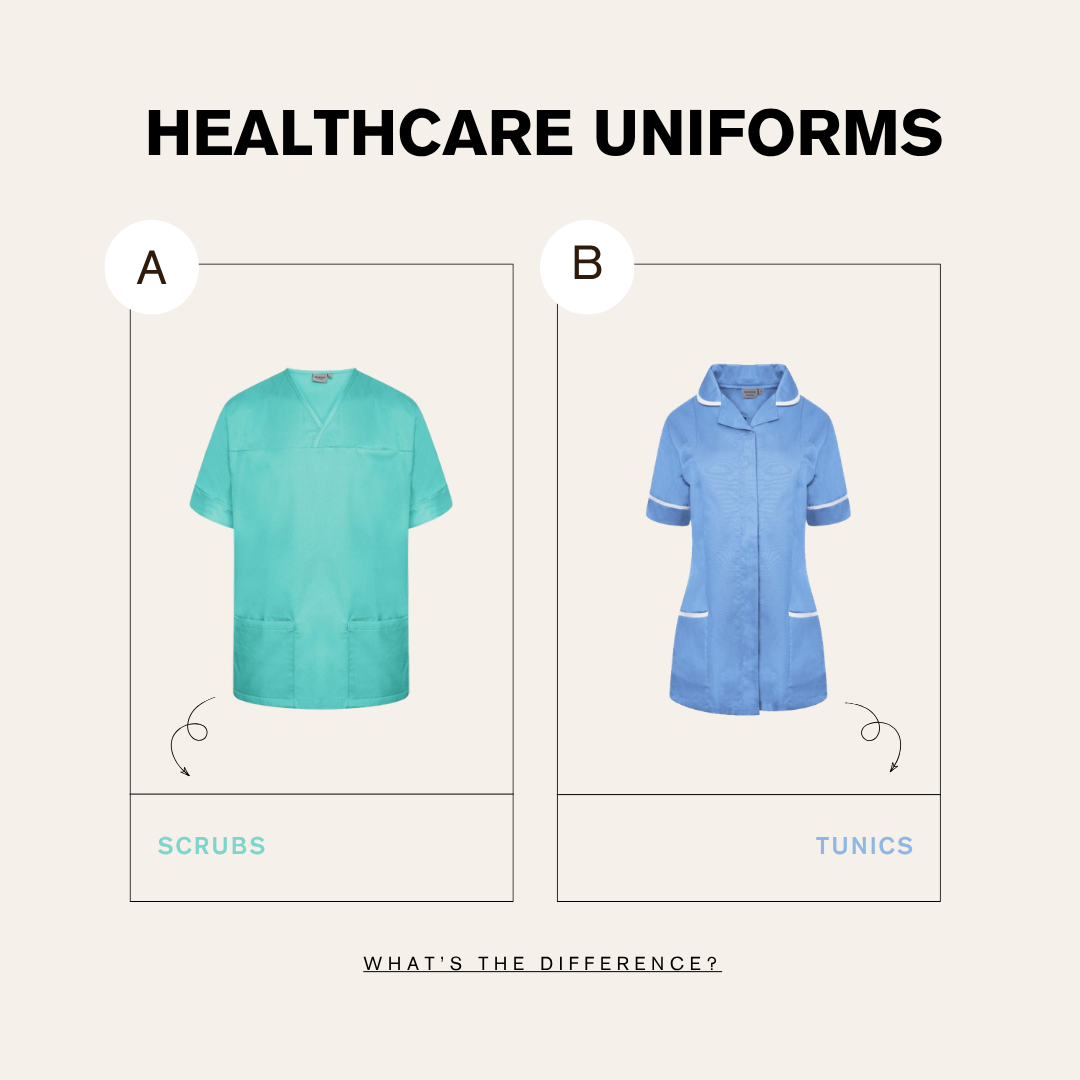
A healthcare uniform is more than looking professional, it’s about comfort, practicality and meeting workplace standards. Although uniforms, scrubs and tunics are often mentioned together, they each serve a slightly different purpose depending on your job and where you work.
Modern medical clothing has come a long way. Today’s fabrics are lighter, stretchier and better at managing with long shifts, allowing healthcare professionals to stay comfortable while maintaining a clean, professional appearance.
What Counts as a Traditional Healthcare Uniform?
A traditional healthcare uniform usually is a smart, tailored tunic paired with matching trousers. It’s the classic look associated with nurses, carers, dental teams, pharmacy staff and other patient facing roles.
These uniforms are designed to look polished while still being practical. Many workplaces use colour coding or contrast trims to help patients quickly identify staff roles or departments. Modern versions often blend the familiar structured look with stretch fabrics, moisture‑control technology and easy‑care finishes, so they stay comfortable and durable throughout busy shifts.
Scrubs vs Tunics: What’s the Difference?
Although both are considered to be under medical uniforms, they’re made for different needs.
Scrubs are typically a two-piece set: a loose-fitting top and matching trousers.
Scrubs are often worn in:
-Operating theatres
-Emergency departments
-Intensive care units
-Hospital wards
-GP surgeries
-Veterinary practices
Their simple design also supports infection control because they wash well at high temperatures and are suitable for industrial laundering.
Tunics consist of a more structured, tailored shape. Including shaped seams, concealed fastenings and practical pockets, giving a smart, professional appearance.
Tunics are popular among:
-Nurses
-Care home staff
-Community healthcare teams
-Dentists
-Pharmacists
-Reception and support staff
Many organisations add embroidered logos or names to tunics to reinforce branding and help patients identify staff.
Are Tunics or Scrubs Better for Nurses?
It depends entirely on the role and the workplace.
Scrubs offer more flexibility and airflow, which is suitable for nurses who are constantly on the move or working in high‑pressure clinical areas.
Tunics represent a more formal, structured look and are mostly preferred in community care, outpatient clinics and care homes.
Most NHS trusts and private providers have uniform policies that specify which style should be worn.
Why Do Some Healthcare Workers Wear Tunics Instead of Scrubs?
Reasons why people opt for tunics:
-Fit workplace dress codes
-Create a more formal, polished appearance
-Support colour‑coded departments
-Allow for embroidered branding
-Include practical storage with multiple pockets
For organisations that focus on presentation and brand consistency, tunics remain a strong favourite.
Choosing the Right Fabric
The best medical clothing balances comfort with performance. Look for fabrics that provide:
-Breathability
-Stretch for easy movement
-Moisture management
-Easy‑care properties
-Fade resistance
-Suitability for high‑temperature or industrial washing
Modern poly‑cotton blends and performance stretch fabrics are designed to withstand demanding healthcare environments while keeping their shape and colour wash after wash.
Choosing the Right Fit
Fit makes a big difference to comfort during long shifts.
Scrubs are intentionally loose in order to maximise movement and suit a wide range of body shapes.
Tunics have a more tailored silhouette since many professionals prefer a polished look.
When choosing a uniform, consider your daily tasks, think of your body type and keep your employer’s dress code in mind. The right fit should promise free movement without feeling restricted.
What Do Scrub Colours Mean in UK Hospitals?
There’s no nationwide colour standard, nevertheless most hospitals use colour coding to distinguish roles or departments. For example, different colours may be assigned to nurses, theatre staff, healthcare assistants or specialist teams. Because this varies between organisations, it’s always best to follow your employer’s guidelines.
Frequently Asked Questions
What’s the difference between scrubs and tunics?
Scrubs are loose, two‑piece garments designed for comfort and infection control. Tunics are more structured and tailored, giving a smart, professional appearance.
For nurses are tunics or scrubs better?
Both work well. Scrubs suit busy clinical environments, while tunics are popular in community care, clinics and care homes.
Why do some healthcare workers wear tunics?
This could be due to tunics support branding, offer a formal look and tend to align with workplace uniform policies.
What defines a traditional healthcare uniform?
A tailored tunic with coordinating trousers which is designed to look professional whilst remaining practical.
Choosing the Right Healthcare Clothing
Whether you prefer scrubs or a traditional tunic, the best uniform is one that helps you work confidently and comfortably. High‑quality materials, thoughtful design and a good fit all result in comfort during long shifts while supporting infection control and professional standards.
Ultimately, the right choice is the one that meets your organisation’s requirements and helps you feel prepared for whatever the day brings.
Related Posts




Recent Posts
1

Kit your Kitchen: 20% off chef uniforms
26 Jun 2025
2

Uniform Workwear Trends 2025
27 Feb 2025
3


5

 RSS Feed